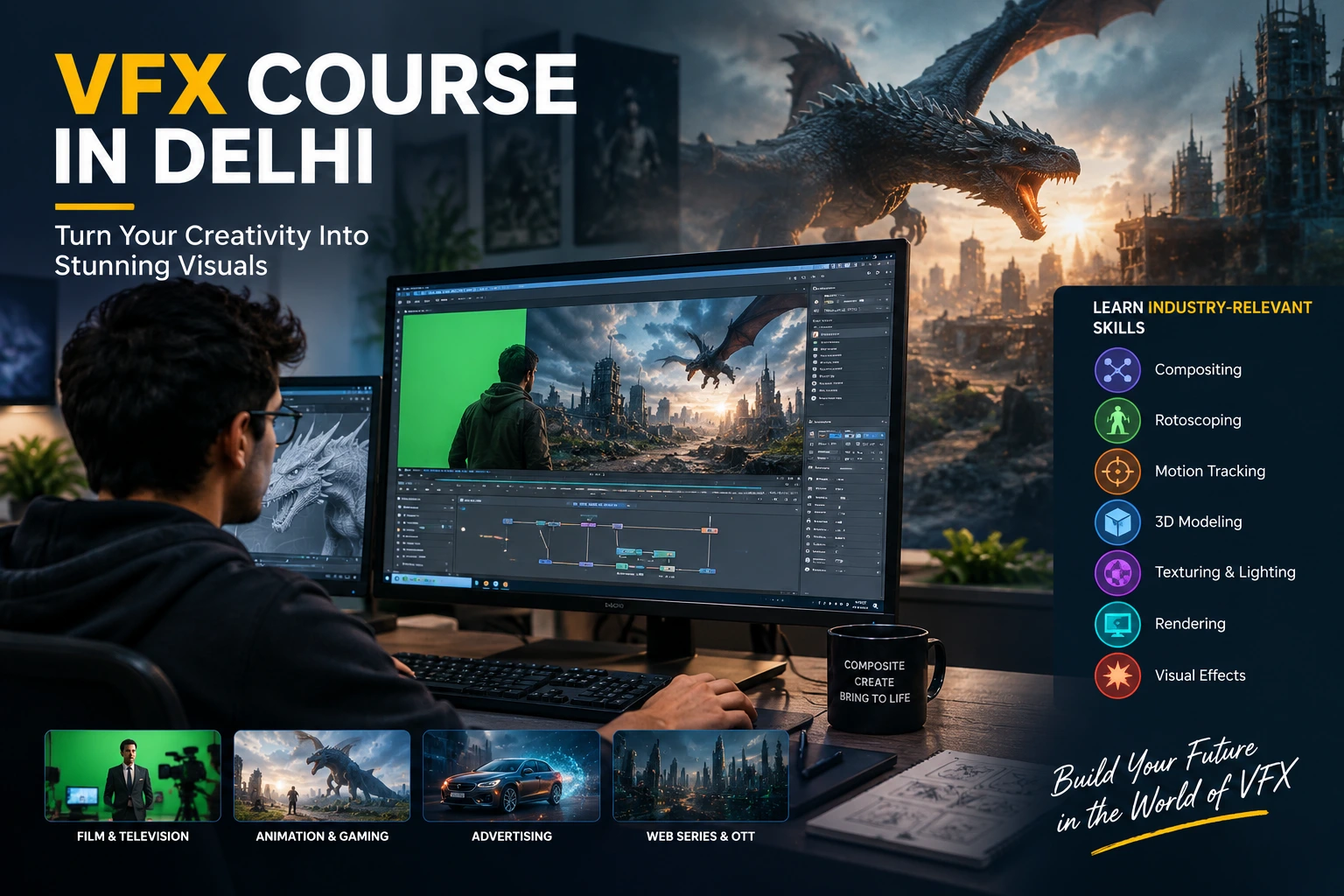
How to choose the best VFX course in Delhi?
How to Choose the Best VFX Course in Delhi: A Complete Guide for Students
Choosing the right career in the creative industry can be exciting, especially if you are passionate about movies, animation, gaming, and visual storytelling. If you want to turn your creativity into a successful career, enrolling in the best VFX course in Delhi can be an excellent step. Visual Effects (VFX) has become an essential part of modern entertainment, allowing filmmakers and content creators to bring imaginative ideas to life. From Hollywood blockbusters to Indian cinema, advertisements, web series, and digital content, VFX professionals play a significant role in creating visually stunning experiences. By choosing the right VFX training program, you can develop the technical skills and creative expertise needed to build a successful career in this exciting industry.
If you want to build a career in this growing field, enrolling in the right VFX course in Delhi can be an important first step. However, with numerous institutes offering different programs, choosing the best one can feel overwhelming.
In this guide, we will explore the important factors to consider when selecting a VFX course, including course curriculum, practical training, faculty experience, placement support, infrastructure, and fees.
What Is a VFX Course and Why Should You Learn It?
Visual Effects, commonly known as VFX, involves creating or enhancing images and scenes using computer-generated imagery and digital technology. It allows artists to combine live-action footage with computer-generated elements to create realistic or imaginary environments.
A professional VFX course teaches students the technical and creative skills required to work on visual effects projects. Depending on the program, students may learn compositing, rotoscoping, motion tracking, 3D modeling, texturing, lighting, rendering, and special effects.
Learning VFX can open up career opportunities in several industries, including:
- Film and television production
- OTT platforms and web series
- Advertising and commercial production
- Animation and gaming
- Music videos and digital content
- Virtual production and immersive media
For students interested in creative technology, a VFX course can provide a foundation for entering this exciting industry.
How to Choose the Best VFX Course in Delhi
Finding the right institute requires more than comparing advertisements or choosing the cheapest program. You should evaluate the quality of training, the skills you will develop, and the opportunities available after completing the course.
Here are the most important factors to consider before making your decision.
1. Check the VFX Course Curriculum
The curriculum is one of the most important factors when selecting a VFX course in Delhi. A well-designed program should cover fundamental concepts before introducing advanced visual effects techniques.
Look for a course that includes subjects such as:
- VFX fundamentals and visual storytelling
- Compositing and green-screen techniques
- Rotoscoping and motion tracking
- 3D modeling and texturing
- Lighting and rendering
- Matchmoving and camera tracking
- Particle simulations and visual effects
- Project development and portfolio creation
Popular industry tools may include Adobe After Effects, Foundry Nuke, Autodesk Maya, Blender, and other software relevant to the course.
However, learning software alone is not enough. The curriculum should also teach you how to solve creative problems, understand shots, work with footage, and complete projects according to industry requirements.
Before enrolling, ask the institute for a detailed syllabus and check whether it is updated regularly.
2. Evaluate the Experience of the Faculty
Experienced instructors can make a significant difference in your learning journey. They can explain complex concepts, demonstrate professional workflows, and help you understand how visual effects are created in real production environments.
When researching a VFX institute in Delhi, check the qualifications and industry experience of its trainers.
Consider asking these questions:
- Do the instructors have practical VFX experience?
- Have they worked on professional projects?
- Do they provide individual feedback on assignments?
- Can they help you improve your creative and technical skills?
You can also attend a demo class, if available, to understand the teaching style and classroom environment.
A good instructor should help you develop independent problem-solving skills rather than simply demonstrate software features.
3. Prioritize Practical Training and Live Projects
VFX is a skill-based profession, so practical experience is essential. Watching tutorials or attending theoretical lectures cannot replace the experience of creating your own visual effects shots.
When comparing a VFX course in Delhi, look for institutes that provide hands-on assignments, practical demonstrations, and project-based learning.
For example, students should ideally get opportunities to work on projects involving:
- Green-screen background replacement
- Object removal and cleanup
- Cinematic compositing
- 3D object integration
- Motion tracking and camera matching
- Environment creation and visual enhancement
These projects help you understand the complete production process and identify areas where you need improvement.
Practical training also helps you develop confidence, improve your workflow, and prepare for the expectations of potential employers.
4. Review the Institute’s Portfolio and Student Work
One effective way to evaluate a VFX institute is to examine the work produced by its students.
Ask to see student showreels, final projects, before-and-after comparisons, and examples of completed assignments. These materials can provide insight into the quality of training and the skills students develop.
Pay attention to the quality of compositing, lighting, tracking, rendering, and overall visual presentation.
You should also check whether students receive guidance on creating a professional demo reel. A demo reel is a short collection of your best work that helps employers assess your abilities.
Remember that a polished website or attractive promotional video does not automatically guarantee quality training. Actual student work can offer a more useful indication of the learning experience.
5. Compare Course Duration, Fees, and Value
The cost of a VFX course in Delhi can vary depending on the institute, course duration, software training, facilities, and level of specialization.
Some programs focus on introductory skills, while others offer more comprehensive training in advanced compositing and 3D visual effects.
Instead of choosing a course based only on its fees, compare what you receive in return.
Check the following details:
- Total course duration
- Number of practical training hours
- Software and equipment availability
- Study materials and project assignments
- Portfolio development support
- Certification details
- Internship or placement assistance
Ask for a complete fee structure before enrolling, including registration charges, examination fees, software costs, or any additional expenses.
The best course is not necessarily the most expensive one. It is the program that offers relevant skills, quality instruction, sufficient practice, and good value for your budget.
6. Check Placement Assistance and Career Support
Career guidance is another important consideration when selecting a VFX institute.
Some institutes offer placement assistance, resume preparation, interview practice, portfolio reviews, and internship opportunities. These services can help students understand the hiring process and prepare for entry-level roles.
Before relying on placement claims, ask the institute for clear information about its career support services.
Useful questions include:
- Does the institute help students prepare demo reels?
- Are internship opportunities available?
- Does it conduct portfolio reviews?
- Does it organize interviews or connect students with employers?
- Can it provide verifiable information about previous student outcomes?
Remember that placement assistance does not guarantee employment. Your skills, portfolio, communication, consistency, and performance during interviews also influence your career opportunities.
7. Explore the Software, Systems, and Learning Environment
VFX production can require powerful computer systems and specialized software. Therefore, the learning environment should support the practical requirements of the course.
When visiting an institute, check whether students have access to suitable computers, graphics capabilities, required software, and a comfortable workspace.
Find out whether the institute provides enough time for independent practice outside scheduled classes.
You should also consider class size. Smaller groups may allow instructors to provide more personalized feedback, although the actual teaching quality matters more than class size alone.
If possible, visit the campus and observe a practical session before making your final decision.
8. Read Reviews and Speak to Former Students
Online reviews can help you understand other students’ experiences, but they should not be your only source of information.
Look for detailed feedback about teaching quality, practical assignments, instructor support, facilities, and career guidance.
If possible, speak directly with former students and ask whether the course met their expectations.
You can ask about the amount of practical training they received, the quality of their final projects, and whether they felt prepared to apply for jobs after completing the program.
Compare feedback across multiple sources to develop a balanced understanding of the institute.
Which Skills Should You Learn in a VFX Course in Delhi?
A good VFX program should help you develop both technical and creative abilities.
Important skills include:
- Compositing: Combining multiple visual elements into a seamless final image.
- Rotoscoping: Isolating objects or characters from footage.
- Motion tracking: Matching digital elements to camera or object movement.
- 3D modeling: Creating digital objects, props, and environments.
- Lighting and rendering: Making 3D scenes appear realistic and visually appealing.
- Color correction: Matching the appearance of different visual elements.
- Problem-solving: Identifying and correcting visual inconsistencies.
You should also develop patience, attention to detail, teamwork, and time-management skills. These qualities are valuable when working on complex shots and meeting production deadlines.
Career Opportunities After Completing a VFX Course
After completing a suitable VFX course in Delhi, you may pursue entry-level opportunities in studios, production houses, advertising agencies, and digital media companies.
Potential career roles include:
- VFX artist
- Compositing artist
- Rotoscopy artist
- Matchmove artist
- 3D modeler
- Lighting artist
- Junior motion graphics artist
The roles available to you will depend on your specialization, practical experience, and portfolio quality.
Many students begin with junior positions and gradually progress as they develop stronger technical skills and gain experience working on professional projects.
Building a strong demo reel, practicing regularly, and staying updated with industry tools can help you improve your long-term career prospects.
Common Mistakes to Avoid When Choosing a VFX Institute
Before enrolling, avoid making these common mistakes:
- Choosing only by price: Low fees should not come at the expense of practical training.
- Ignoring the syllabus: Make sure the course covers the skills you want to learn.
- Trusting guaranteed job claims: Verify placement information and understand the conditions.
- Overlooking student projects: Review the quality of actual work produced during training.
- Ignoring software practice: Confirm that you will receive sufficient hands-on experience.
- Enrolling without research: Compare at least two or three institutes before deciding.
Taking time to evaluate these factors can help you make a more informed investment in your education.
Conclusion: Find the Right VFX Course in Delhi for Your Career
Choosing the best VFX course in Delhi requires careful research and a clear understanding of your career goals. The right program should offer an updated curriculum, experienced faculty, hands-on projects, suitable infrastructure, portfolio development, and reliable career guidance.
Before enrolling, compare course content, visit the institute if possible, review student work, and ask detailed questions about fees and placement support.
Most importantly, remember that completing a course is only the beginning. Consistent practice, creativity, technical knowledge, and a strong demo reel will help you stand out in the competitive visual effects industry.
Whether you want to work in films, OTT productions, advertising, or digital entertainment, investing in the right training can help you build a solid foundation for your VFX career. Choose a course that matches your interests, learning style, and budget, and take your first step toward becoming a skilled visual effects artist.